Definition
Project Workflow
Scene Planning Workflow
A project workflow for organizing looks, states and transitions into an operable installation plan.
This is a project workflow and design method, not a standalone released software product.
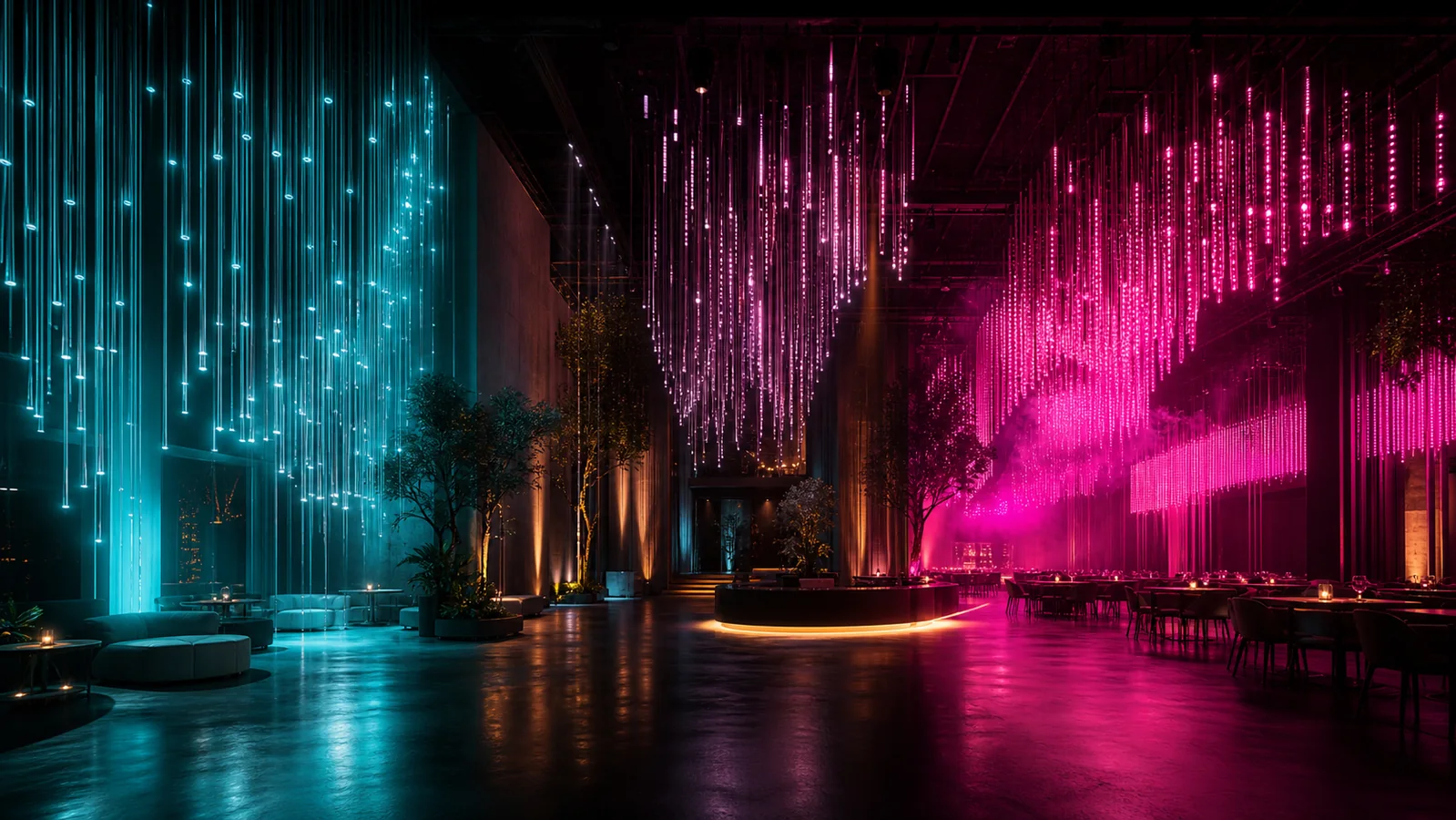
The problem
A compelling visual test is not yet an operational installation. Venues need clear states, graceful transitions and simple daily operation.
Role
Organize spatial behavior into scenes and rules, then coordinate when and how those scenes change.
Workflow concept
Scene Workflow planning view.
Concept visual for discussing operation, content behavior and project review. Final tools and interfaces are confirmed per project.
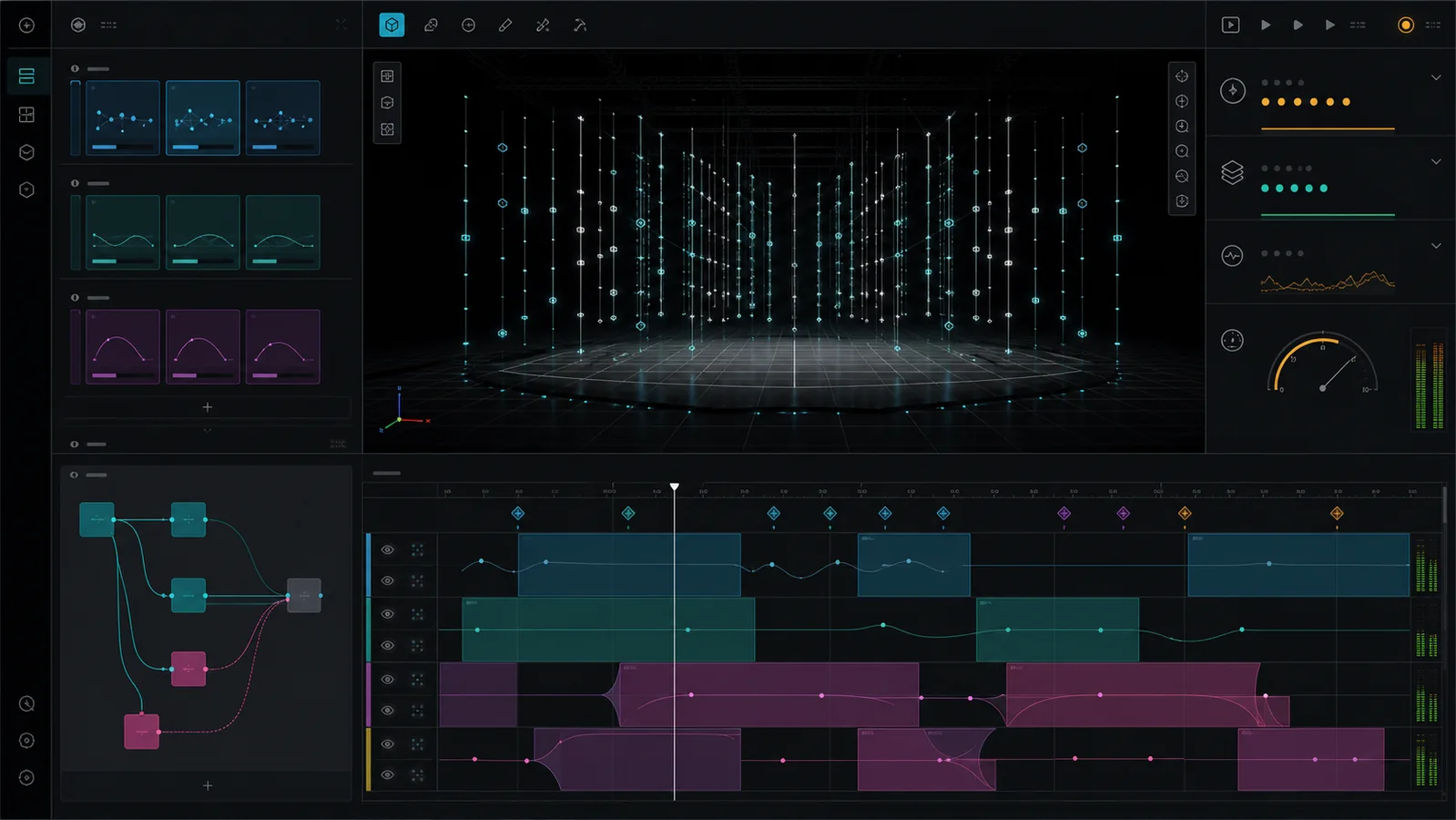
How it works
A clear creative sequence.
Each step keeps creative intent connected to operational reality.
Define visual and behavioral states.
Set transitions, timing and interaction rules.
Combine audio-responsive cues with spatial layout zones.
Provide predictable idle, active and recovery behavior.
Creative outputs
Signals a scene can use.
- Reusable scenes and sequences
- Timed and interactive transitions
- Day, night and event modes
- Operational fallback states
Best suited to
Where it adds value.
- Permanent venues with daily operation
- Retail environments with scheduled content
- Exhibitions with interactive states
- Events requiring repeatable cue sequences
What it changes