Definition
Project Workflow
Audio-responsive Workflow
A project workflow for translating approved sound cues into spatial media behavior.
This is a project workflow and design method, not a standalone released software product.
The problem
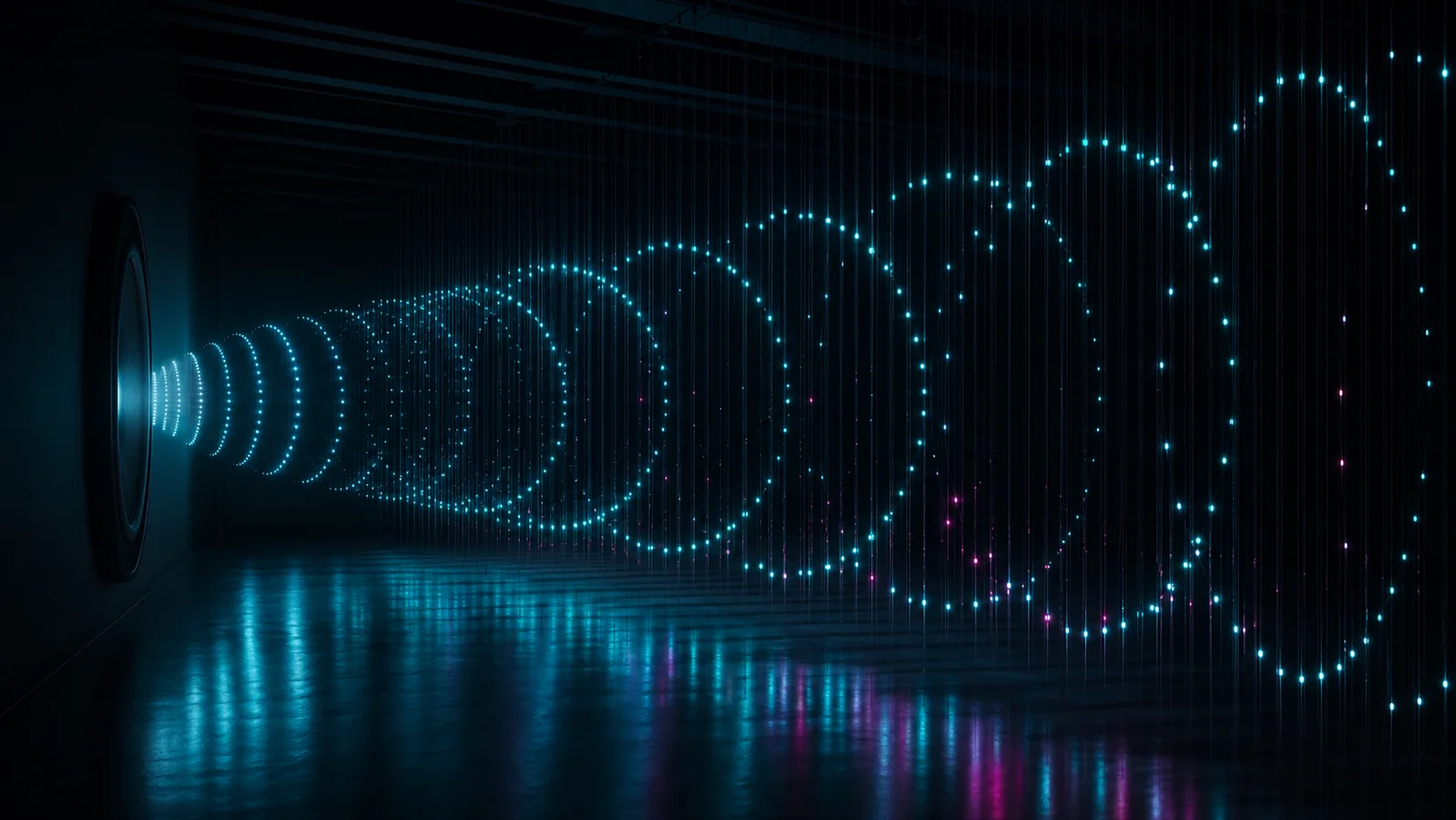
Spatial installations often react to audio as one undifferentiated signal. The result can feel decorative rather than composed.
Role
Separate useful musical or environmental events from noise, then expose those events as controllable creative signals.
Workflow concept
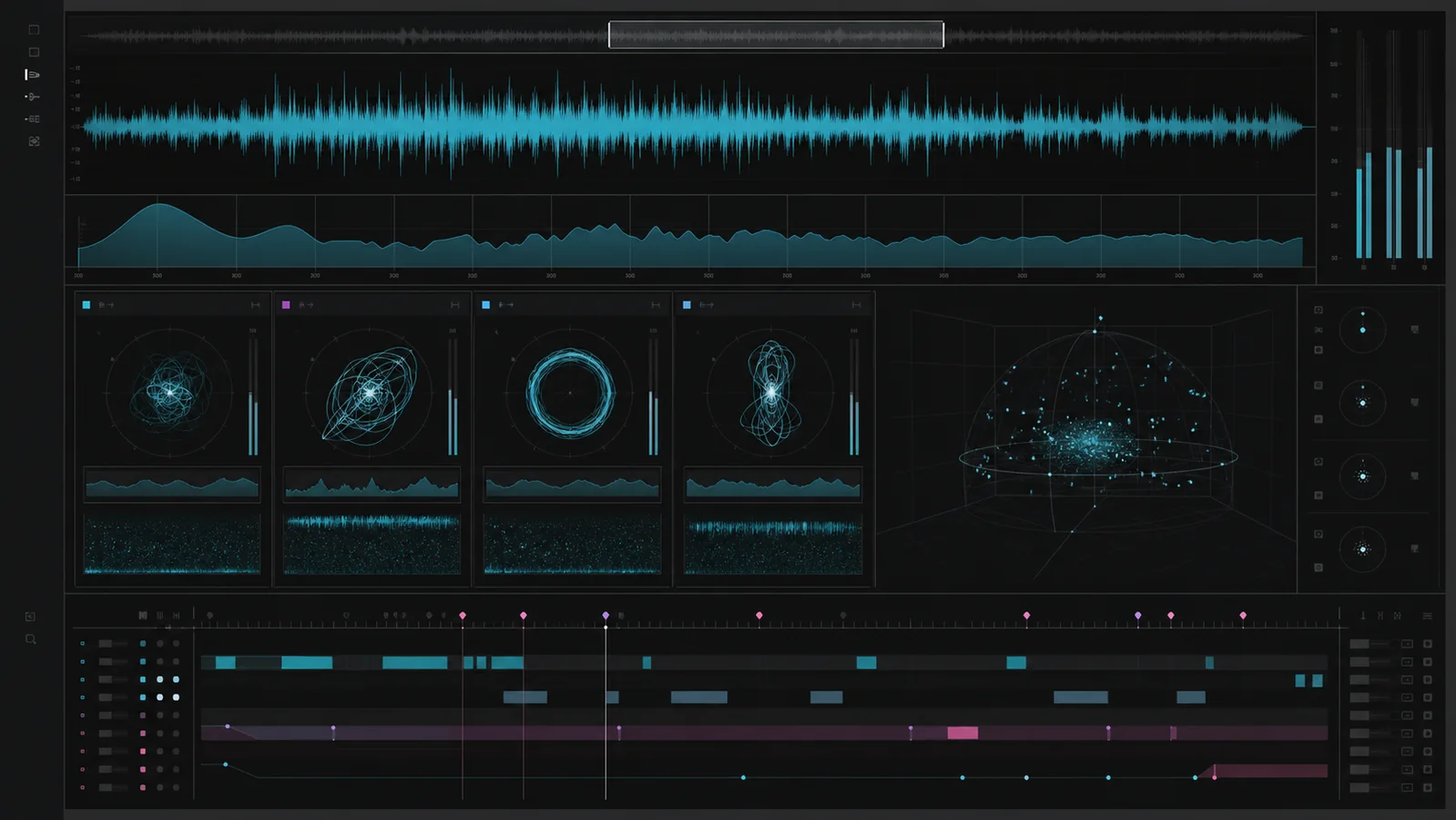
Audio Workflow planning view.
Concept visual for discussing operation, content behavior and project review. Final tools and interfaces are confirmed per project.
How it works
A clear creative sequence.
Each step keeps creative intent connected to operational reality.
Listen to an approved audio source or live environment.
Identify changes such as energy, pulse, contrast and silence.
Smooth unstable reactions so the space feels intentional.
Pass meaningful cues to scene planning for composition.
Creative outputs
Signals a scene can use.
- Energy and intensity cues
- Rhythmic triggers and transitions
- Calm, active and silence states
- Project-specific interaction cues
Best suited to
Where it adds value.
- Music-led brand experiences
- Clubs and performance environments
- Interactive exhibitions
- Ambient installations that respond to a room
What it changes